
The power of naming the abstract
Dec 17, 2025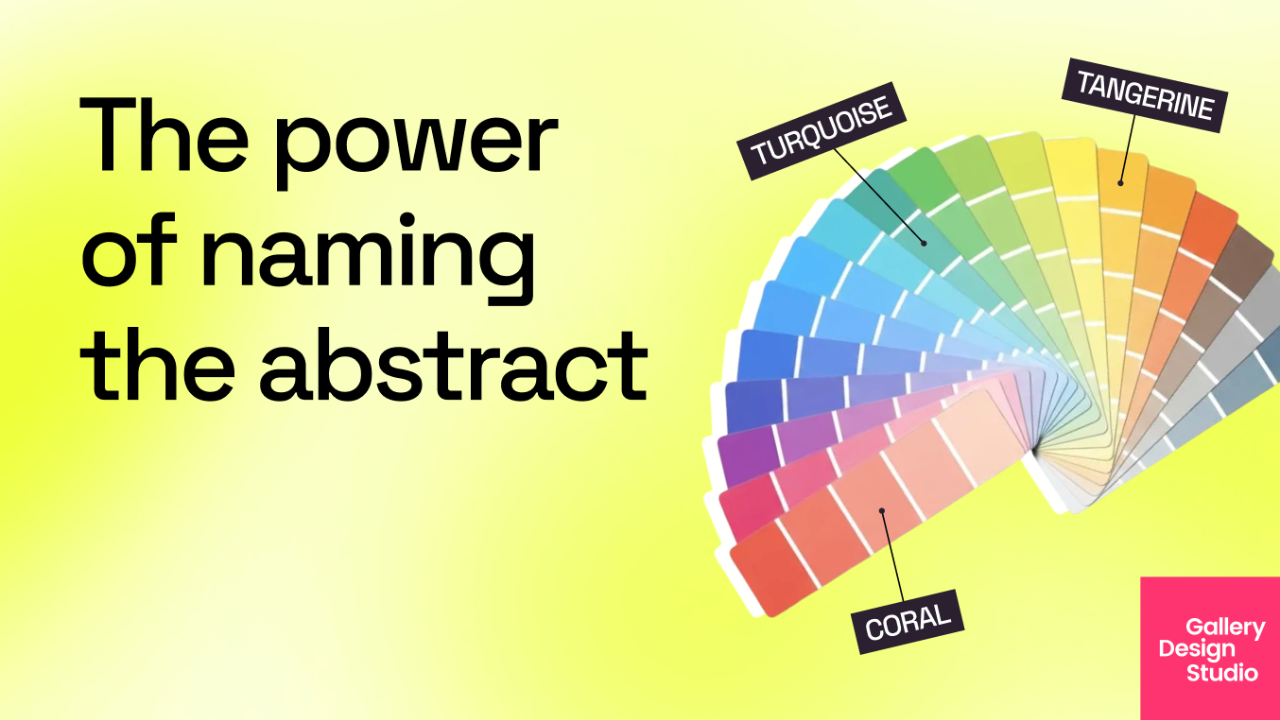
Recently, a client gave us an insight that stuck: they had multiple shades of blue in their brand palette, and instead of saying “dark blue” or “medium blue” — or worse, passing around hex codes — they gave each shade a name.
That simple step turned technical confusion into clarity.
Naming abstract elements makes them easier to communicate, reference, and remember accurately, while also making them feel more official to non-design stakeholders.
It’s the same principle Pantone has built an entire system on — and why paint brands like Sherwin-Williams give colors names like “Naval” or “Agreeable Gray.” The name makes it usable, memorable, and even emotional. (Want to learn more about how home design and content design overlap? Say no more!)
What We’re Doing About It
Our team will start applying this thinking more deliberately. Instead of treating colors, layouts, or even workflow stages as anonymous assets, we’re beginning to give them names.
Whether it’s “Anchor Blue” for a hero color or “Momentum Stage” for a design sprint phase, naming bridges the gap between abstract and concrete. It makes collaboration smoother for both our team and our clients. (Read our guide on how to work with designers)
Business Takeaway
Although it may seem basic, naming creates clarity and accelerates alignment. In our line of work, the difference between “Blue #123456” and “Anchor Blue” isn’t trivial — it’s the difference between confusion and shared understanding.
Giving abstract elements names makes them stick, creates excitement, and ensures everyone is speaking the same language.
About Gallery Design Studio
What We Do
We help B2B and B2G tech companies explain what they do—faster, clearer, and more persuasively—through visual content that drives understanding and accelerates sales.
Why It Matters
Most content is too slow, too vague, or too complicated. We fix that by combining strategic design thinking with creative firepower—so the message lands and moves buyers forward.
How We Work
We move fast, but we think first. This isn’t a content vending machine—it’s a partnership. Expect a team deep in the work: noodling in Figma, building decks, storyboarding product videos, and pushing ideas forward before a brief even exists. We think like owners, not order-takers.


